7 Fire-Resistant Construction Methods for Luxury Homes in Texas
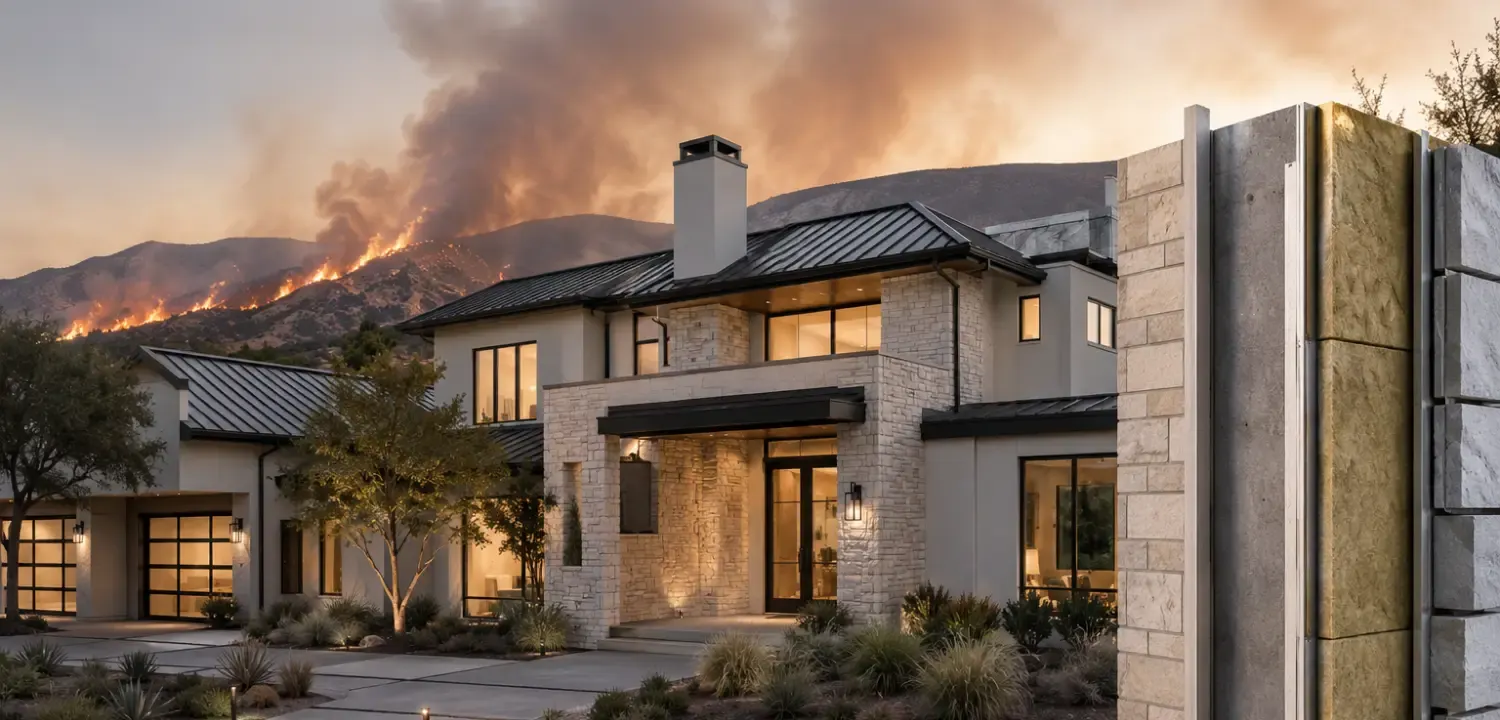
If you're renovating or building a luxury home in the Texas Hill Country, the Panhandle, or anywhere along Austin's western edge, there's a conversation you need to have before you ever pick a paint color: fire risk.
It's not the topic most homeowners expect to discuss with their architect, but the numbers make it hard to ignore.
Texas now has over 244,000 properties sitting in moderate-or-greater wildfire risk zones, the third-highest total of any state in the country, behind only California and Colorado.
Zoom out further, and Texas has about 3.2 million homes located in the wildland-urban interface (WUI), where subdivisions and native brush sit close enough together that a single spark can travel from a hillside to a rooftop.
In 2025 alone, the state recorded 6,304 wildfires, trailing only California.
So while wildfire has long been framed as a "West Coast problem," Texas homeowners, especially those with high-value properties in wildfire-prone terrain, are now squarely in the conversation.
That matters even more if your home sits in the Hill Country.
Austin ranks as the fifth most wildfire-exposed metro area in the United States and the highest-ranked outside California, with close to 95,000 homes and $40.6 billion in reconstruction value at moderate or greater risk.
Add in the native Ashe juniper (locally known as "cedar") that blankets much of Travis, Hays, and Williamson counties, and you have a landscape that's practically built to carry fire.
For owners of high-end homes, where rebuild costs run into the millions, that risk isn't just a safety issue. It's a financial one.
This is exactly why builders, like TX Sparks Luxury Homes, design fire resistance into a custom home from the very first blueprint rather than bolting it on after the fact.
Below, we'll walk through the construction methods, materials, and design decisions that actually move the needle.
Why Fire-Resistant Construction Matters for Luxury Homeowners
Let's start with the obvious: a bigger, more architecturally ambitious home has more surface area, more custom materials, and more money on the line.
But there's a second, quieter reason fire-resistant construction has become a priority for luxury buyers: insurance.
High-value homeowners insurance in Texas, for properties valued between $750,000 and $3 million, typically runs $4,200 to $18,500 a year depending on construction type, location, and coverage.
In wildfire-exposed corridors like the Hill Country, carriers are increasingly running dedicated wildfire risk scores on individual addresses at renewal time, not just baseline hail and wind models.
Homeowners who can document mitigation efforts, defensible space, ember-resistant construction, and a Class A roof tend to keep their coverage affordable and their policies renewed.
Those who can't are finding out the hard way, at non-renewal time, that their premiums (or their ability to get covered at all) depend heavily on how their home is built.
In other words, fire-resistant construction isn't just about surviving a wildfire event. It's about staying insurable in a market that's tightening year over year.
You can also read: 7 Popular Luxury Home Styles in Texas: A Complete Guide for 2026.
The Building Blocks of a Fire-Resistant Luxury Home
Fire-hardening a home isn't about turning your dream house into a concrete bunker.
It's about layering smart material choices and design decisions so that embers, radiant heat, and direct flame have as few ways in as possible.
Here's where to focus, roughly in order of priority.
1. Start With the Roof
The roof is statistically the most vulnerable part of any home during a wildfire. Embers land in valleys, collect in gutters, and smolder long before visible flames ever arrive.
That's why Class A roofing, tested to withstand severe fire exposure, should be non-negotiable on a high-end build.
Standing-seam metal, clay or concrete tile, and slate all perform exceptionally well and happen to be popular choices in upscale Texas architecture already, so this is one upgrade that rarely clashes with design intent.
Even Class A-rated asphalt shingles offer solid protection at a lower price point, if metal or tile isn't the aesthetic you're after.
Just as important as the roofing material itself is sealing the gaps around it. Bird-stop tile ends, keep gutters clear of debris, and install a metal drip edge so embers can't collect and smolder at the roofline.
TX Sparks Luxury Homes builds this in as a default, not an upgrade.
The firm specifies standing-seam metal roofing across its Texas projects, which typically carries both a Class 4 impact rating and a Class A fire rating, and is non-combustible by nature.
That combination matters in Texas, where hail and wildfire risk often overlap in the same Hill Country zip codes.
You can also read: Why Engineering Matters More Than Interior Finishes in Luxury Homes?
2. Close the Ember Entry Points
Homes rarely burn down from a wall of flame marching up to the front door.
More often, wind-driven embers find their way into attic and crawlspace vents, ignite from the inside, and the fire spreads outward.
Installing 1/8-inch noncombustible metal mesh screens over all vent openings is one of the most cost-effective upgrades available, and for a luxury build, it's an easy detail to get right the first time rather than retrofit later.
3. Choose Noncombustible Exterior Materials
Stucco, fiber cement siding, brick, stone, and metal panel systems all resist ignition far better than wood or vinyl.
A standard three-coat stucco system alone can deliver a one-hour fire rating on exterior walls.
Fiber cement products have become especially popular for high-end builds because they combine ignition resistance with a clean, modern look that architects and designers can work with.
The key detail: run noncombustible material continuously from the foundation to the roofline, with at least six inches of hard material right at the base of the walls, since that's often where dry landscaping debris accumulates and ignites first.
You can also read: Materials That Make the Difference: TX Sparks Luxury Homes vs. Other Builders.
4. Upgrade Windows and Glazing
Windows are one of the weakest links in fire performance. Radiant heat can shatter standard glass long before flames make contact.
Dual-pane windows with tempered glass hold up dramatically better under heat exposure.
For homes with large picture windows facing dense vegetation or a canyon view (a common feature in Hill Country estates), consider reducing glazing size on the most exposed elevations, or specifying fire-rated glazing assemblies for those walls specifically.
This is another area where TX Sparks Luxury Homes builds above the standard spec, using 1-inch insulated dual-pane glass units set in full aluminum framing rather than the thinner single-pane glass and plastic or PVC frames common with typical builders.
Beyond the fire and impact resistance benefits, aluminum framing holds up better than PVC under the intense UV exposure and temperature swings Texas is known for.
You can also read: 5 Reasons Structural Steel Enhances Modern Texas Home Design.
5. Rethink Decks and Attached Structures
Decks, pergolas, and outdoor living spaces are hallmarks of high-end Texas homes, but they're also common fire pathways if built with untreated wood.
Composite decking or ignition-resistant wood alternatives reduce this risk substantially, and keeping the area beneath any deck clear of stored combustibles closes off another common ignition point.
The same logic applies to detached garages, wood fences, and sheds: anything combustible that's physically connected to the house can act as a fuse.
You can also read: Why Does Quality Construction Define True Luxury?
6. Consider Structural Systems Built for Resistance
For homeowners building from the ground up, structural choices carry weight too.
Insulating Concrete Forms (ICF) combine polystyrene panels with a poured concrete core, delivering strong fire resistance alongside excellent thermal and sound performance, a genuine win-win for a luxury build in Texas heat.
Steel framing and fire-rated Type X drywall further slow a fire's progress through interior walls, buying critical time for occupants and first responders alike.
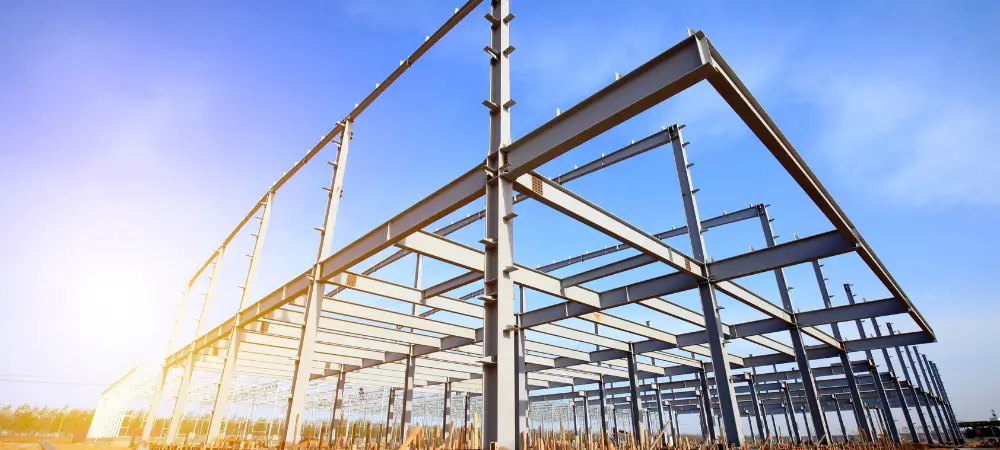
Steel framing is where TX Sparks Luxury Homes has built its reputation.
The firm specializes in structural steel and light gauge steel (LGS) construction, an approach that's inherently non-combustible, unlike traditional wood framing, and doesn't feed a fire from the inside out.
It's also immune to the termites and humidity-driven rot that plague wood-framed homes across Texas, so the same steel skeleton that protects against fire also protects the long-term structural integrity of the home.
You can also read: Custom Home vs. Spec Home in Texas: Which Is Right for High-End Buyers?
7. Don't Skip the Landscape
Even the most fire-hardened structure can be compromised by dense vegetation growing right up against the walls.
Maintaining a noncombustible perimeter of at least five feet immediately around the home, often called "Zone 0," followed by carefully managed, well-spaced landscaping further out, dramatically reduces the odds that flames ever reach the structure directly.
For Hill Country properties surrounded by native cedar and oak, this kind of defensible space planning should be part of the landscape architecture from day one, not an afterthought.
You can also read: 8 Tips to Build a Timeless Luxury Home in Texas.
How TX Sparks Luxury Homes Builds Fire-Resistant Texas Homes
Not every builder treats fire resistance as a core design principle rather than an optional add-on.
TX Sparks Luxury Homes is a Texas-based custom luxury home builder that builds fire-hardened performance into its homes from the ground up, using commercial-grade materials in a residential setting rather than treating fire resistance as an afterthought.
A few specifics worth knowing:
Steel and LGS framing as standard. Instead of conventional wood studs, TX Sparks Luxury Homes builds with structural steel and light gauge steel (LGS) framing, a non-combustible system that also resists the humidity and termite damage common across Texas.
Standing-seam metal roofing. Every roof is specified to carry both Class A fire and Class 4 impact ratings, protecting against wildfire embers and Texas hailstorms in a single system, with a service life that often runs 40 to 70 years.
Commercial-grade glazing. Homes are built with 1-inch insulated dual-pane glass in full aluminum frames, offering far greater heat and impact resistance than the thinner single-pane glass and plastic frames used by many production builders.
A full design-build process. From initial vision and site selection through design, permitting, finishes, and construction, TX Sparks manages the entire build, which means fire-resistant material choices get baked into the architecture from day one instead of being value-engineered out later.
The firm has built luxury estates across the Dallas-Fort Worth area and the Hill Country, including projects in Celeste, Southlake, McKinney, and Lago Vista, Texas, giving it direct experience designing for the varied wildfire, hail, and wind exposures found across the state.
You can also read: LGS vs. Traditional Wood Framing: Which is Right for Your Luxury Home in Texas?
Weighing the Cost
Fire-resistant upgrades typically add somewhere in the range of 5% to 15% to construction costs, depending on the materials chosen and the extent of hardening required.
For a high-end home, that's a real number, but it's worth measuring against the alternative: a total loss, a canceled policy, or years of chasing coverage in a shrinking insurance market.
Many of these upgrades also pay for themselves indirectly, since fire-resistant homes are simply easier and cheaper to insure over the long run.
Conclusion
Texas is no longer a state where luxury homeowners can treat wildfire as someone else's problem.
Between the state's growing at-risk property count, the Hill Country's unique fuel load, and an insurance market that's actively rewarding mitigation, fire-resistant construction has moved from "nice to have" to genuinely essential for anyone building a high-value home in exposed terrain.
The good news is that none of this requires compromising on design.
Class A roofing, fiber cement or stucco siding, ember-resistant vents, and smart landscaping are all details that work with high-end architecture, not against it.
Talk to your architect and builder early, ask specifically about fire-hardening at the design stage, and you'll end up with a home that's not just beautiful, but built to last through whatever Texas weather throws at it next.
Frequently Asked Questions
1. What is the most fire-resistant roofing material for a Texas home?
Standing-seam metal, clay or concrete tile, and slate all carry Class A fire ratings, the highest level of protection against ember ignition. Standing-seam metal is especially popular for Texas luxury builds because it also carries a Class 4 impact rating, which helps against hail, and typically lasts 40 to 70 years with minimal maintenance.
2. Does fire-resistant construction actually lower homeowners insurance costs in Texas?
It can. Insurance carriers in wildfire-exposed areas like the Texas Hill Country are increasingly scoring individual properties for wildfire risk at renewal. Homes with documented mitigation, such as a Class A roof, ember-resistant vents, and defensible space, tend to keep coverage more affordable and are less likely to face non-renewal than homes built with standard materials.
3. How much more does it cost to build a fire-resistant luxury home in Texas?
Fire-hardening typically adds roughly 5% to 15% to construction costs, depending on the materials specified and the extent of the work. For high-end builds, many of these upgrades (steel framing, standing-seam metal roofs, upgraded glazing) are already part of a premium build spec, which narrows the cost gap considerably.
4. Is steel framing more fire-resistant than wood framing?
Yes. Unlike wood, steel framing is non-combustible, meaning it doesn't add fuel to a fire from within the structure. It also avoids the termite damage and moisture-related rot that can weaken wood-framed homes over time in Texas's humid climate.
5. What areas of Texas have the highest wildfire risk for homeowners?
The Texas Hill Country, including Travis, Hays, and Williamson counties around Austin, carries some of the state's highest wildfire exposure due to dense native Ashe juniper and grassland fuel. The Texas Panhandle and Central Texas also see significant wildfire activity, particularly during the February-to-April fire season.
6. Does TX Sparks Luxury Homes build fire-resistant custom homes in Texas?
Yes. TX Sparks Luxury Homes builds fire-resistant construction into its standard specification, using structural steel and LGS framing, Class A fire-rated standing-seam metal roofing, and commercial-grade insulated glazing across its custom luxury homes in the Dallas-Fort Worth area and the Texas Hill Country.
Build Your Fire-Resistant Luxury Home with TX Sparks
Fire-resistant construction works best when it's part of the plan from day one, not a retrofit after the fact.
If you're planning a custom luxury home anywhere in Texas, TX Sparks Luxury Homes can walk you through exactly how steel framing, Class A roofing, and commercial-grade materials come together to protect your investment without compromising on design.
Get in touch with TX Sparks Luxury Homes to start the conversation, or call (469) 598-2558.