Why Engineering Matters More Than Interior Finishes in Luxury Homes
Engineering matters more than interior finishes in Texas luxury homes, influencing durability, energy efficiency, structural performance, and long-term value.
Imagine stepping into your newly constructed luxury estate in the hills of Austin or the sprawling suburbs of Dallas.
The European oak floors feel perfect underfoot. The Calacatta marble countertops in the kitchen are a work of art, and the custom-imported Italian cabinetry is flawless. It feels like absolute perfection.
Now, fast forward three years.
You start to notice a thin hairline fracture in the drywall above the living room archway. A few months later, the principal bedroom door sticks when you try to close it.
Then comes the real heartbreak: a sudden, terrifying crack resonates through that beautiful marble kitchen island.
What went wrong? You spent millions. You hired a top-tier interior designer.
The answer is simple, yet devastating: You focused on the cosmetics while ignoring the physics.
In the Texas luxury real estate market, it is incredibly easy to fall in love with what you can see. However, the longevity, safety, and true value of a Texas estate depend entirely on what you cannot see.
Let’s dive deep into why structural and environmental engineering matter infinitely more than interior finishes when building or buying a luxury home in the Lone Star State.
The Texas Reality: A Hostile Environment for Buildings
To understand why engineering reigns supreme, we have to look at the ground beneath our feet and the skies above our heads.
Texas boasts some of the most challenging geographical and climatic conditions in the United States for residential architecture.
1. The Nightmare of Expansive Clay Soils
A large portion of Texas, including high-density luxury markets such as Dallas-Fort Worth, Houston, and parts of Austin, sits atop expansive clay soils, often referred to as "black gumbo."
These clay soils act like a dense sponge. When it rains, they absorb water and expand violently.
When a drought hits, a frequent occurrence during Texas summers, the soil shrinks and cracks.
This constant, rhythmic movement exerts thousands of pounds of pressure per square foot on a home's foundation.
The Data Speaks: According to data, expansive soils cause more financial damage to houses in the United States each year than floods, hurricanes, tornadoes, and earthquakes combined.
Without advanced structural engineering, no amount of high-end finishes will survive the shifting earth.
A poorly engineered foundation on Texas clay will inevitably crack, causing a domino effect of structural failures throughout the entire mansion.
2. Extreme Weather Volatility
Texas weather is notoriously uncompromising. A luxury home here must be capable of enduring:
Triple-digit summer heatwaves exceeding $105^\circ\text{F}$ for weeks on end.
Suddenly, violent convective thunderstorms with baseball-sized hail.
Hurricane-force winds along the Gulf Coast and in the Houston area.
Severe winter freezes (like the historic freeze of 2021) that drop temperatures below zero.
When an estate is poorly engineered for these thermal and mechanical stresses, the building envelope fails.
Consequently, your multi-million-dollar investment begins to deteriorate from the inside out.
You can also read: How Texas Climate Influences Luxury Homes Design & Materials?
Foundation Engineering: The True Luxury Foundation
When building a high-end home, the foundation shouldn't just meet local building codes; it must exceed them.
Standard residential builders often use basic post-tension slabs. True luxury requires a bespoke engineering approach tailored to a rigorous geotechnical report.
Foundation Type | How It Works | Why It's Required for Texas Luxury |
Drilled Pier & Beam | Concrete piers are drilled deep into the earth (often 15 to 30 feet) until they hit stable bedrock. | By anchoring the home to solid bedrock, the structure remains completely immobilized, entirely bypassing the volatile movement of the topsoil clay. |
Heavy-Duty Post-Tension Slabs | Thick concrete slabs reinforced with high-strength steel cables torqued to immense pressure. | This creates a rigid monolithic grid. If the soil shifts unevenly underneath, the entire slab acts like a rigid raft, preventing localized cracking. |
If a builder cuts corners on the foundation to allocate an extra $100,000 toward a premium appliance package, they are building on borrowed time.
Fixing a cracked foundation on a 7,000-square-foot luxury home can easily cost upwards of $150,000 to $300,000 in structural repairs alone.
Worst of all, the excavation and leveling process will completely destroy the expensive tile, flooring, and custom cabinetry upstairs.
You can also read: Why Does Quality Construction Define True Luxury?
HVAC and Building Science: The Invisible Comfort
True luxury is not just visual; it is experiential. It is the feeling of breathing crisp, clean, perfectly humidified air when it is stifling with 80% humidity outside.
In Texas, designing a luxury HVAC system requires complex thermodynamic calculations, far beyond simply matching square footage to a random unit size.
This discipline is known as Building Science.
The Danger of the "Oversized" System
A common mistake made by non-engineered builders is installing massive, oversized air conditioning units, thinking "bigger is better."
In reality, an oversized AC cools a room too quickly and shuts off before it can properly dehumidify the air.
Moreover, this creates a cold, clammy, and humid indoor environment, the perfect breeding ground for toxic mold.
The Engineered Solution
An expertly engineered luxury home utilizes a multi-pronged mechanical strategy:
Variable-Refrigerant Flow (VRF) Systems: These systems run continuously at lower, highly efficient speeds, providing precise zone control and flawless dehumidification.
Dedicated Outdoor Air Systems (DOAS): These bring in fresh, filtered outside air, conditioning it before it ever enters the living space to maintain immaculate indoor air quality.
Positive Pressure Engineering: By keeping the inside of the home at a slightly higher air pressure than the outside, hot, humid Texas air is mechanically prevented from leaking through cracks into the walls.
Imagine spending $50,000 on rare, imported wallpaper only to watch it peel away from the drywall two years later because moisture is trapped inside the wall cavity.
That is the cost of neglecting mechanical engineering.
You can also read: Energy-Efficient Luxury Homes in Texas: 5 Things That Work.
The Building Envelope: Framing, Vapor Barriers, and Windows
The "envelope" is the thermal shell that separates your indoor sanctuary from the harsh Texas climate. In a luxury build, this envelope requires meticulous engineering oversight.
Advanced Framing and Structural Steel
Luxury architecture frequently demands open-concept floor plans, soaring 24-foot ceilings, and massive walls of glass that dissolve the barrier between indoor and outdoor living.
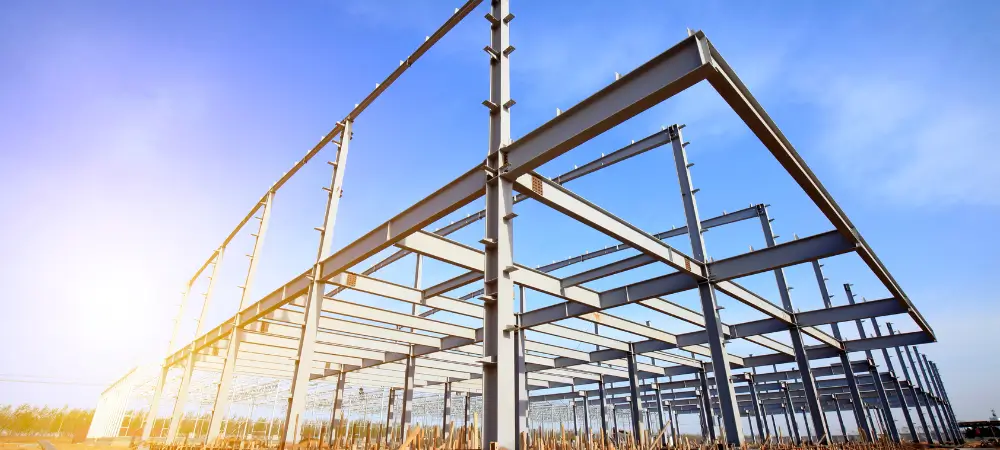
Achieving these breathtaking spaces requires complex structural steel framing.
An engineer must calculate the exact wind-load capacities to ensure that a massive 30-foot glass sliding door wall won't bow or shatter when a severe spring storm hits the region.
Thermal Bridging and Moisture Management
When the hot Texas sun beats down on a house, heat transfers through solid objects (like wood studs or steel beams) via a process called thermal bridging.
Engineered homes utilize advanced techniques to combat this:
Continuous Exterior Insulation: Wrapping the entire exterior of the home in rigid foam insulation to break the thermal bridge.
Fluid-Applied Vapor Barriers: Instead of cheap house wraps that tear easily, high-end engineering specifies commercial-grade, fluid-applied membranes that are rolled or sprayed directly onto the sheathing, creating a completely airtight, waterproof seal.
You can also read: 7 Structural Details that Add Long-Term Value in Texas Luxury Homes.
The Economics of Luxury: ROI on Engineering vs. Aesthetics
Let's look at this through a purely financial lens.
When it comes time to sell an estate, sophisticated buyers are increasingly hiring independent structural engineers and building scientists to conduct pre-purchase inspections.
Consider a comparative scenario of two luxury homes built in the same neighborhood at the same price point:
Home A: The Aesthetic Focus
Features: Basic code-minimum foundation, standard HVAC units, builder-grade framing. Over $400,000 spent on ultra-luxury interior finishes, gold-plated fixtures, and exotic stone.
Result after 5 years: Minor foundation settling causes hairline cracks in the custom plaster walls. High humidity levels create a faint musty odor. The home struggles to maintain a cool temperature in July, resulting in $1,200 monthly electric bills.
Resale Impact: Savvy buyers spot the cosmetic cover-ups. The inspection report flags structural movement. The property sits on the market, forcing a massive price reduction.
Home B: The Engineering Focus
Features: Drilled pier-to-bedrock foundation, commercial-grade VRF HVAC system with dehumidification, structural steel framing, and a fluid-applied vapor barrier. Tasteful, high-quality, but standard luxury finishes.
Result after 5 years: The structure remains absolutely rock-solid and perfectly level. The indoor air quality is pristine. Energy bills are remarkably low for a home of its size.
Resale Impact: The home commands a premium. The engineering documentation is presented as a badge of honor, assuring the buyer that this investment is safe, durable, and structurally sound.
Pro Tip for Buyers: Interior finishes can be easily swapped out. If you tire of a kitchen countertop, you can replace it in a week.
However, you cannot easily replace a failing foundation or change the structural framing of a completed home without tearing it down to the studs.
You can also read: Design-Build vs Traditional Architecture Model for Luxury Homes.
Finding the Balance: How to Prioritize Your Build
To be clear, choosing engineering does not mean you must settle for an ugly home.
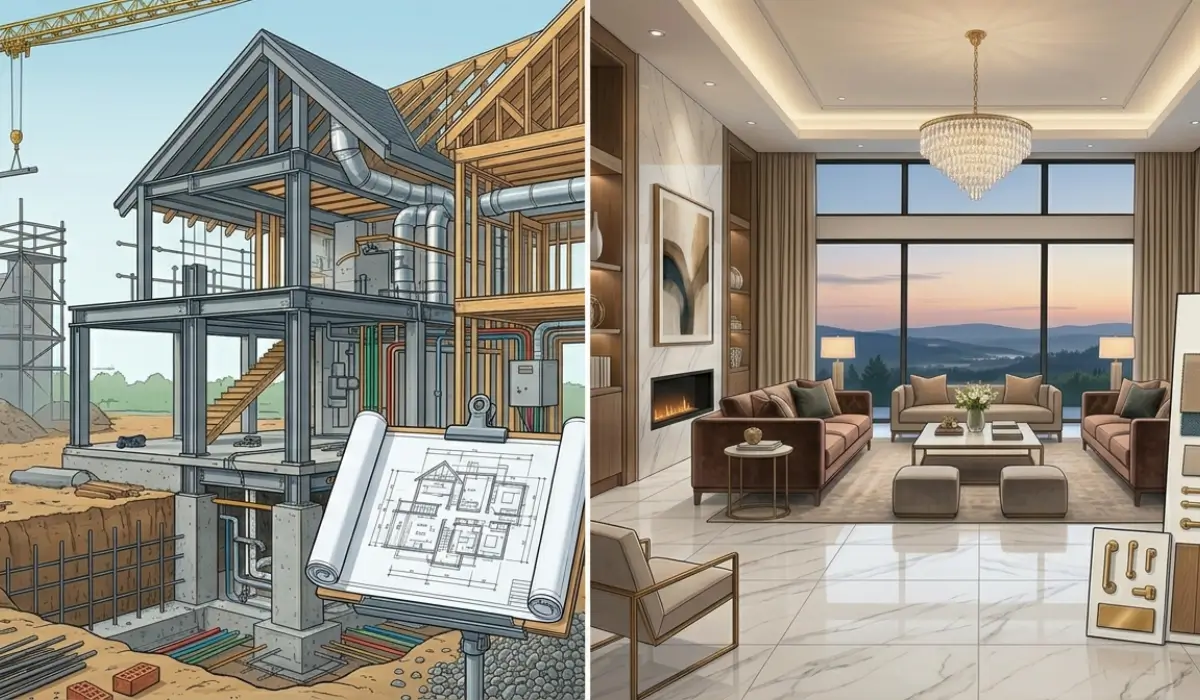
The goal is to establish an unshakeable structural foundation so that your beautiful interior finishes can endure for decades.
If you are currently planning or purchasing a luxury home in Texas, ensure your team includes the following key professionals right from the start:
A Geotechnical Engineer: To perform comprehensive core drilling on your specific lot and analyze the soil composition before the foundation is designed.
A Structural Engineer: To design a custom foundation and framing plan tailored explicitly to that geotechnical report.
A Building Third-Party Inspector: To perform thermal imaging and blower-door testing during construction to verify that the vapor barrier and insulation are flawlessly installed.
You can also read: 8 Tips to Build a Timeless Luxury Home in Texas.
TX Sparks Luxury Homes: Where Uncompromising Engineering Meets Timeless Design
If you want to ensure your investment survives the test of time, you cannot separate form from function.
This exact philosophy is why TX Sparks Luxury Homes has become one of Texas's most respected custom home builders.
At TX Sparks Luxury Homes, a residence is never simply built; it is engineered and crafted from scratch. They understand that true luxury runs deeper than the surface.
Moreover, our building philosophy centers on marrying cutting-edge structural engineering with world-class interior design.
When you build with TX Sparks, your home benefits from:
Advanced Steel and Light-Gauge Framing: Enabling those magnificent, open-concept floor plans, soaring ceilings, and dramatic walls of glass without structural sagging or wind-load risks.
High-Performance Building Envelopes: Utilizing advanced R25 insulation, premium aluminum doors and windows, and precision manufacturing that drastically reduces air leakage, slashes energy bills, and protects against toxic moisture buildup.
Bespoke, Tailored Planning: From detailed site analysis and geotechnical engineering to custom 3D renderings and curated premium finishes, every single line is drawn with purpose and permanence.
Whether it is a tranquil waterfront estate like the Bluewater or a striking contemporary masterpiece like the Penrose Residence in Southlake, TX, Sparks Luxury Homes builds legacies that are mathematically engineered to endure the harsh Texas climate.
You can also read: LGS vs. Traditional Wood Framing: Which is Right for Your Luxury Home in Texas?
Conclusion
In the world of Texas luxury real estate, structural integrity is the ultimate form of sophistication.
A home should not merely be a beautiful stage set that looks stunning on camera but falters under the pressures of nature.
It must be an enduring fortress designed to shield your family and your wealth from the elements.
When you invest heavily in world-class engineering, you are purchasing the rarest luxury amenity of all: absolute peace of mind.
Long after trends change and interior design styles evolve, a brilliantly engineered home will stand straight, stay cool, and hold its value for generations to come.
Ready to build an estate designed to endure? Contact TX Sparks Luxury Homes today to start planning your custom Texas legacy.
Frequently Asked Questions
1. How can I tell if a luxury home in Texas has foundation issues?
Early warning signs of foundation movement in a Texas home include interior doors that suddenly stick or refuse to latch, gaps between the crown molding and the ceiling, and hairline cracks in drywall, especially angling out from the corners of door frames or windows.
On the exterior, look for stair-step cracks in the brick mortar or gaps around window frames. If you notice a cracked tile or stone countertop, it often indicates the floor beneath has shifted.
2. Is a pier-and-beam foundation always better than a slab foundation in Texas?
Not necessarily "better," but it depends entirely on the soil report. A standard slab foundation can fail on expansive Texas clay, but a heavily engineered post-tension slab or a slab built on top of drilled concrete piers that reach bedrock can be incredibly stable.
For true luxury estates with massive structural weight and expansive footprints, a drilled pier-and-beam or pier-supported slab foundation is the gold standard for preventing movement.
3. Why are my electric bills so high in a relatively new luxury home?
High energy bills usually point to a failure in the building envelope or poor HVAC engineering. If a builder uses standard insulation and doesn't mitigate "thermal bridging" (heat transferring through the wall studs), the Texas summer heat will continuously bleed into your home.
Furthermore, if the HVAC system isn't properly zoned or utilizes outdated single-stage compressors, it will consume massive amounts of energy trying to keep up with the heat.
So, to address this, experienced custom home builders in Texas use advanced R25 insulation, premium aluminum thermal-break windows, and high-performance building envelopes to keep utility costs remarkably low.
4. What is "Building Science" and why should a homebuyer care?
Building science is the collection of scientific knowledge and engineering principles focused on how a building interacts with its environment, specifically regarding heat, air, and moisture flow.
As a luxury buyer, caring about building science ensures your home doesn’t suffer from toxic mold growth, musty odors, poor indoor air quality, or drafty rooms. It is the bridge between a home that looks premium and one that actually feels premium.
5. Can I upgrade my home's structural engineering after the house is built?
Practically speaking, no. While you can perform foundation repair (like underpinning) or retroactively add insulation, it is extraordinarily expensive, highly disruptive, and will often require tearing out the multi-million-dollar interior finishes you just paid for. Engineering is an "all-in" investment that must be done correctly during the framing and foundation-pouring stages. It is always cheaper and safer to build it right the first time with a dedicated design-build firm.