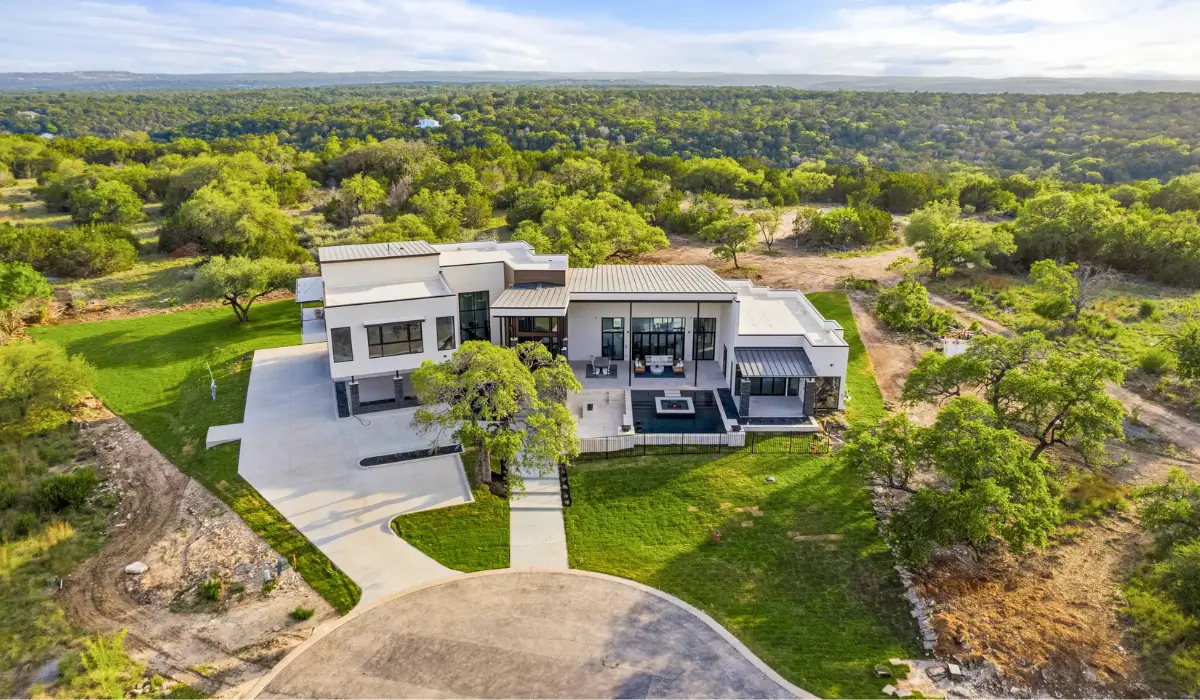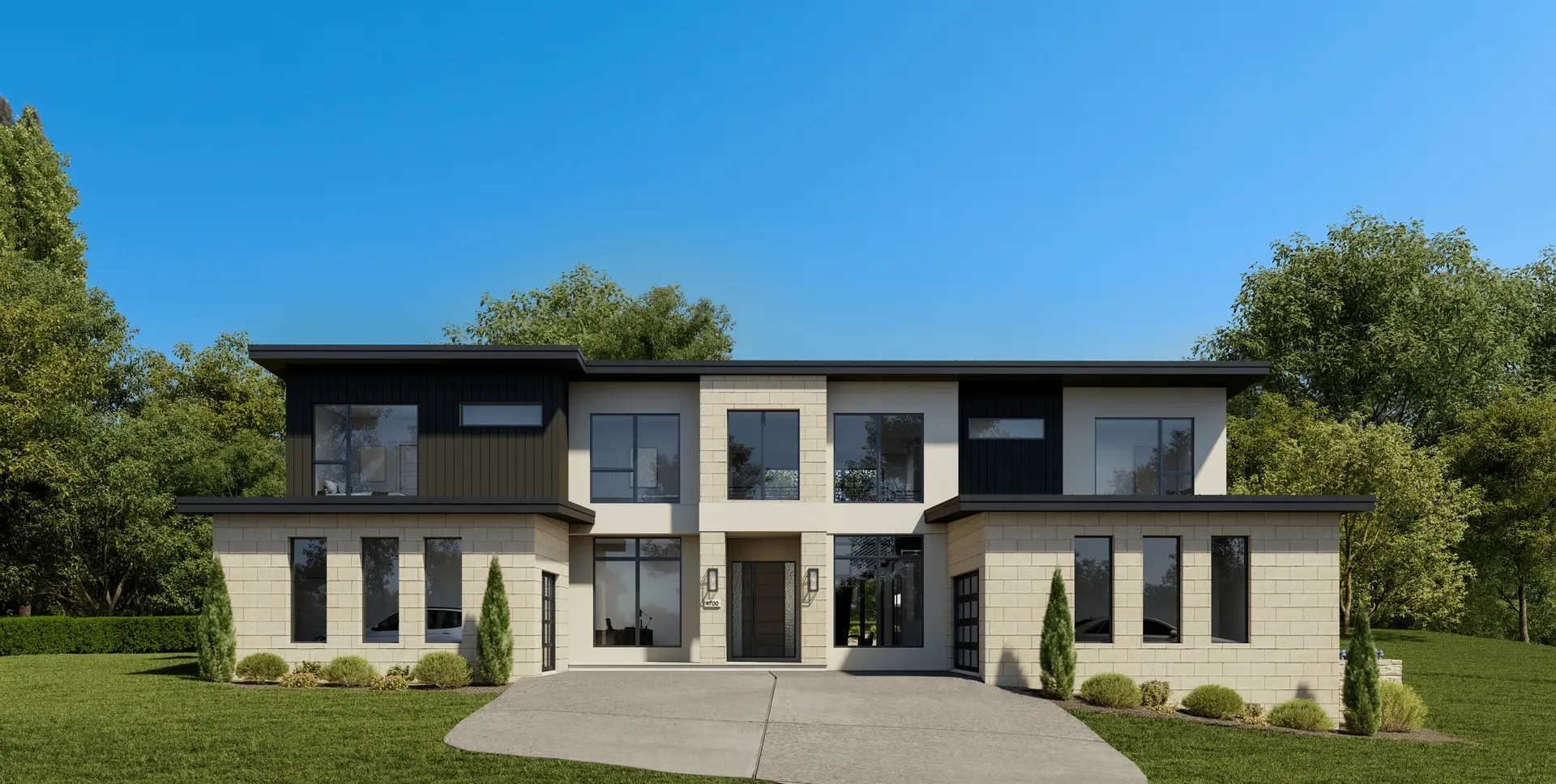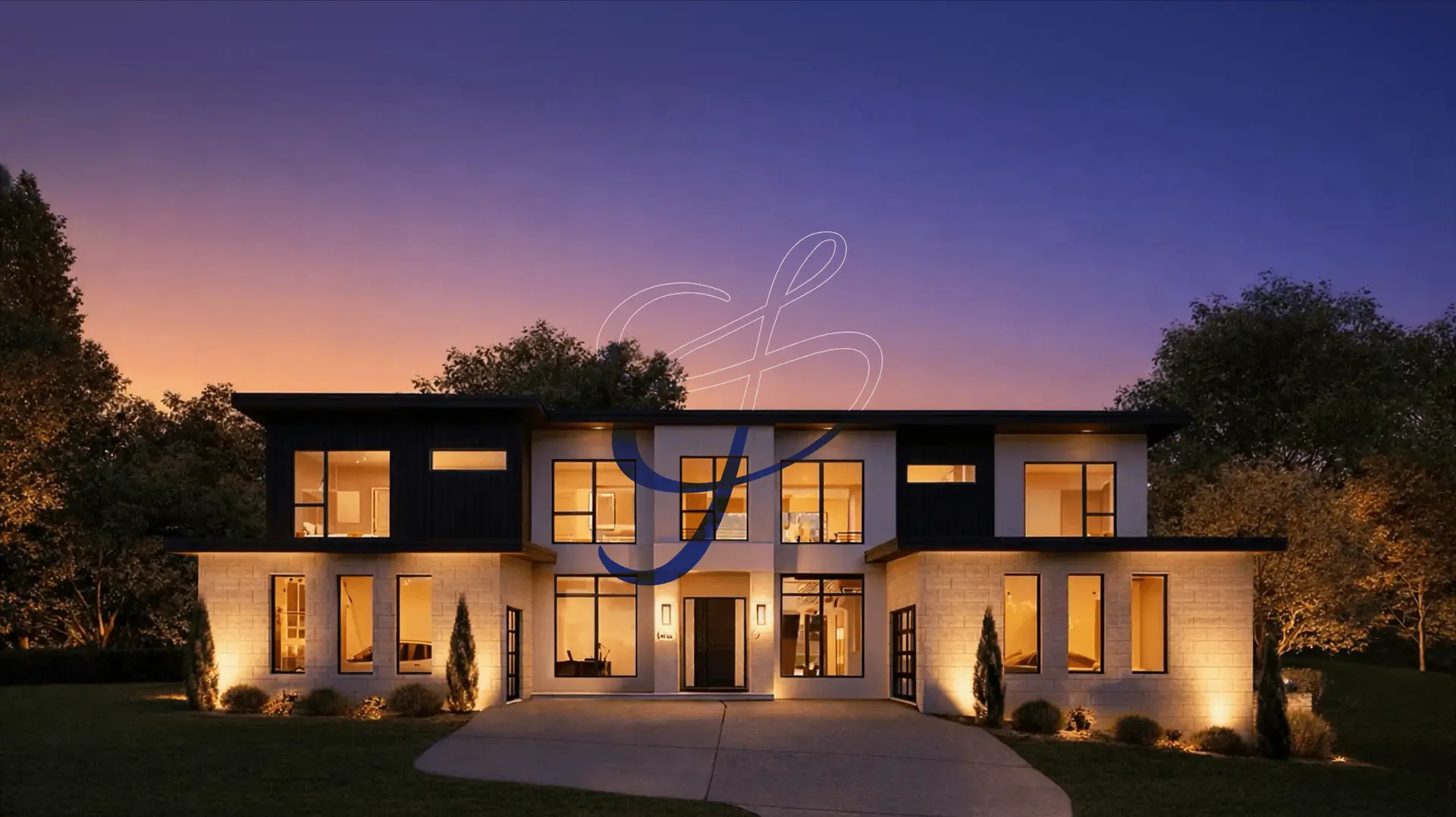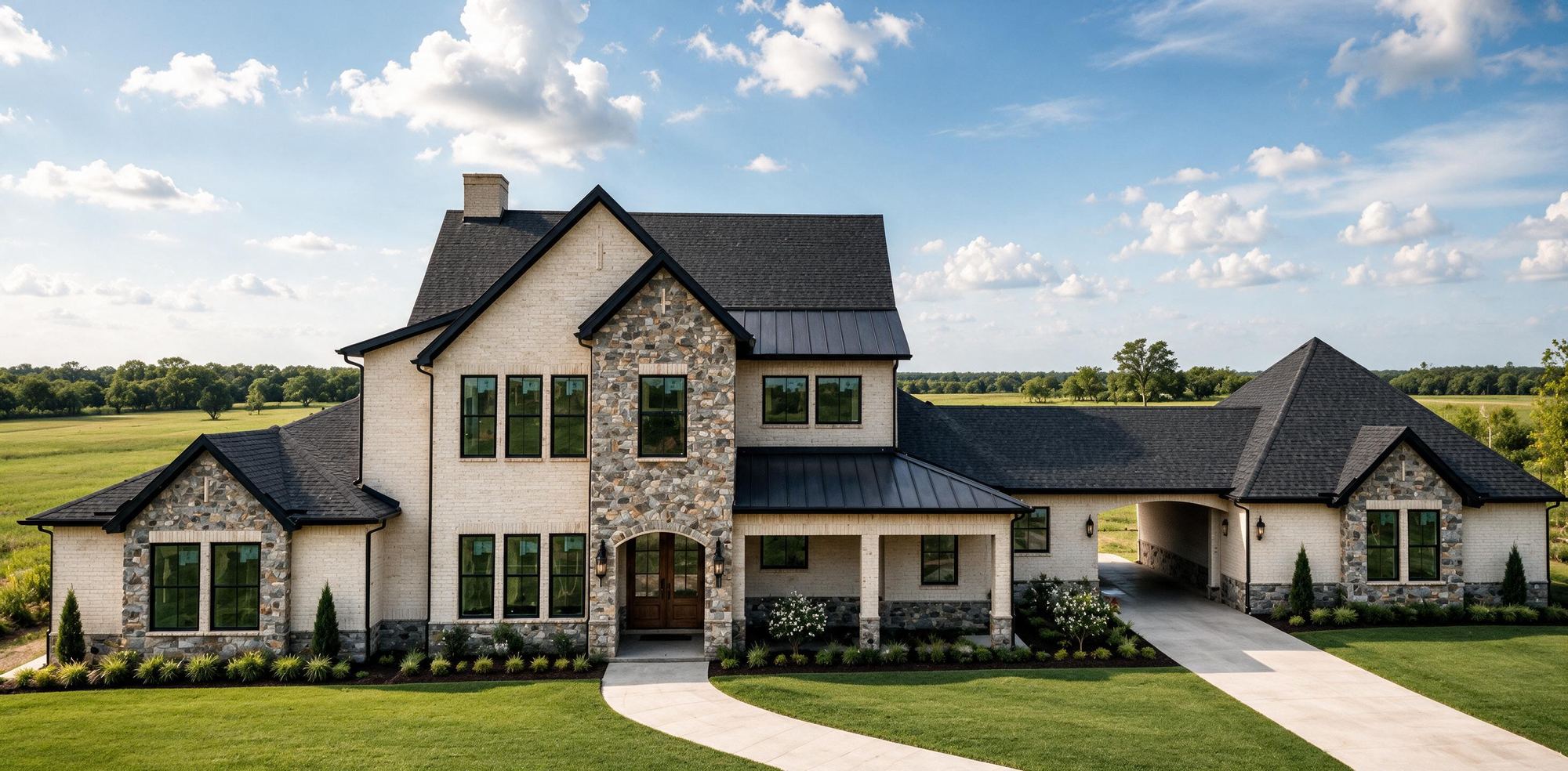
How TX Sparks Luxury Homes Delivered a 5,000 SF Custom Home in 11 Months
Location
Celeste, Texas
Square Footage
5,175 sq ft
Completed
2026
TX Sparks Luxury Homes delivered a 5,000-SF custom home in 11 months through efficient planning, construction management, and project coordination.
Building Luxury Differently
Building a custom luxury home is not simply about selecting premium finishes.
It requires careful planning, strong coordination between multiple disciplines, disciplined construction management, and thousands of decisions that must happen at the right time.
For this approximately 5,000 SF custom residence, TX Sparks Luxury Homes had a clear objective:
Deliver a high-quality custom home in less than 12 months without compromising the design, construction quality, or homeowner experience.
The home was completed in 11 months.
The Challenge
Luxury custom homes involve architects, engineers, designers, subcontractors, suppliers, inspectors, vendors, and homeowners, all working toward the same final product.
Even small delays in design decisions, material procurement, inspections, subcontractor scheduling, or approvals can quickly affect the overall completion date.
Our challenge was therefore not simply to build faster.
It was to create a process that allowed us to:
Maintain construction quality
Coordinate multiple trades efficiently
Make critical decisions early
Procure long-lead materials ahead of time
Keep architecture, engineering, and construction aligned
Give the homeowner continuous visibility
Identify potential issues before they affect the schedule
1. Our Process & Construction Methodology
Preconstruction Before Construction
A significant part of achieving an aggressive construction schedule happens before crews arrive on site.
Our team worked through the architectural plans, engineering requirements, construction sequencing, budgets, material selections, procurement requirements, and schedule before major construction activities began.
Instead of solving every issue in the field, our objective was to identify decisions and potential conflicts early.
Design-Build Coordination
Architecture cannot operate independently from construction.
Throughout the project, the architectural, engineering, and construction teams worked together to review details for constructability, sequencing, and execution.
This helped reduce redesign, field conflicts, and unnecessary delays.
Schedule-Driven Construction
The project was managed through clearly defined construction phases and milestones.
Each phase was connected to:
Trade readiness, material availability, inspections, subcontractor scheduling, and upcoming construction activities.
Rather than waiting for one activity to finish before thinking about the next, the team continuously planned several steps ahead.
Early Procurement
Long-lead materials can become one of the biggest reasons luxury homes get delayed.
Materials and selections requiring longer procurement periods were identified early so purchasing decisions could be made before they affected field operations.
Quality at Every Stage
Speed was never intended to replace quality.
Quality checks were performed throughout construction rather than waiting until final completion.
The team reviewed work before major inspections and before subsequent trades covered completed work.
This approach helped address issues earlier and reduced unnecessary rework.
2. Collaboration Across the Entire Project Team
Luxury homes are built by teams, not by one company alone.
The project required close coordination among:
Architects, structural engineers, MEP consultants, project managers, subcontractors, suppliers, vendors, inspectors, and the homeowner.
TX Sparks Luxury Homes served as the central point of accountability.
Regular coordination helped ensure that everyone understood:
Current construction status
Upcoming activities
Required materials
Design decisions
Inspection requirements
Schedule commitments
Outstanding issues
When questions arose, the goal was to resolve them quickly rather than allowing them to remain open and eventually affect construction.
This collaborative approach also helped preserve the original architectural intent while making sure the design could be executed efficiently in the field.
3. Technology Supporting the Construction Process
Technology was an important part of the project, but it supported the construction methodology rather than replacing it.
The project team used SuperConstruct as a centralized platform for project communication, documentation, progress tracking, and construction management.
Moreover, the homeowner had visibility into progress photos, videos, daily activity, schedule progress, and construction milestones.
This reduced the need for constant calls and frequent site visits while keeping the homeowner connected to the project.
The construction team also used technology for:
Subcontractor coordination
Schedule monitoring
Pay applications
Payment tracking
Lien-waiver management
Certificate of Insurance monitoring
Submittal reminders
Long-lead procurement reminders
Inspection preparation
Project documentation
AI-driven insights also helped identify potential schedule risks and upcoming activities requiring attention.
Instead of information being scattered across emails, text messages, spreadsheets, and individual conversations, the team had a more centralized view of the project.
A Better Homeowner Experience
Building a custom home can become stressful when homeowners do not know what is happening.
For this project, the homeowner could continuously follow construction progress through photos, videos, and project updates.
Because of this visibility, physical site visits were reduced from approximately weekly visits to monthly visits.
The homeowner remained informed without needing to constantly contact the construction team for updates.
This allowed the builder to spend more time managing construction while still providing the homeowner with greater transparency.
Final Walkthrough & Handover
Our process continued through the final stages of construction.
Before inviting the homeowner for the final walkthrough, the construction team performed its own detailed internal review.
Technology assisted the team with a structured final-walkthrough checklist so outstanding items could be identified and corrected before the homeowner walkthrough.
This helped reduce unnecessary back-and-forth communication and created a smoother handover experience.
The Result
Approximately 5,000 SF Custom Home | Target Completion: Less than 12 Months | Actual Completion: 11 Months
The project demonstrated that faster luxury-home construction does not come from simply asking subcontractors to work faster.
It comes from:
Better Preconstruction
Better Planning
Earlier Procurement
Disciplined Scheduling
Strong Quality Control
Continuous Collaboration
Clear Communication
Technology-Driven Visibility
The TX Sparks Luxury Homes Approach
At TX Sparks Luxury Homes, we believe luxury should be reflected not only in what homeowners see after completion, but also in how the home is designed, engineered, coordinated, and built.
Our approach brings together:
Process: Planning and execution designed to protect quality, budget, and schedule.
Collaboration: Architects, engineers, contractors, suppliers, and homeowners working toward one shared objective.
Technology: Better visibility, documentation, communication, and early identification of potential issues. The result is a more controlled and transparent approach to custom-home construction.
“TX Sparks Luxury Homes: Building More Than Beautiful Homes. Building Them Better.”